
You think today’s celebrity drama is wild? Try imagining a world where a woman could outshine kings, bankrupt nobles, and rewrite the rules of power-all without holding a single title. These weren’t queens. They weren’t generals. They were courtesans.
What Exactly Was a Courtesan?
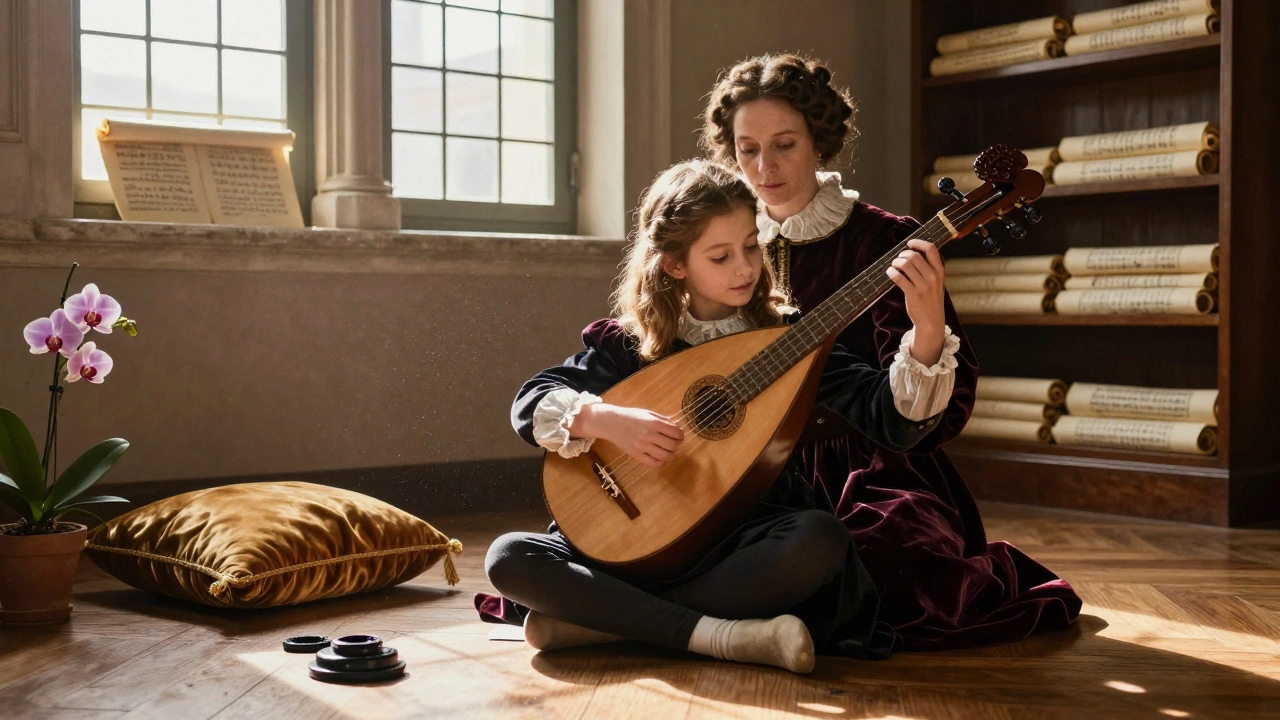
A courtesan wasn’t just a prostitute. That’s the lazy, modern shorthand. In Renaissance Italy, 18th-century France, or Meiji Japan, a courtesan was a highly educated, politically connected woman who traded intellect, artistry, and charm for wealth and influence. She played music, wrote poetry, spoke multiple languages, and advised powerful men. Some even ran their own households, owned property, and dictated fashion trends across Europe.
Think of her as the original influencer-but with a sword hidden in her silk sleeve. While noblewomen were locked in gilded cages, courtesans moved freely through salons, courts, and backrooms where real decisions were made. And when they made mistakes? The fallout wasn’t just gossip. It was revolutions.
The Scandals That Shook Thrones
One name echoes louder than most: Madame de Pompadour. She wasn’t just Louis XV’s lover-she was his chief advisor, art patron, and de facto prime minister. She chose ministers, approved treaties, and even shaped France’s foreign policy. When the king’s own ministers complained, she laughed. She had the king’s ear, the court’s fear, and the people’s fury.
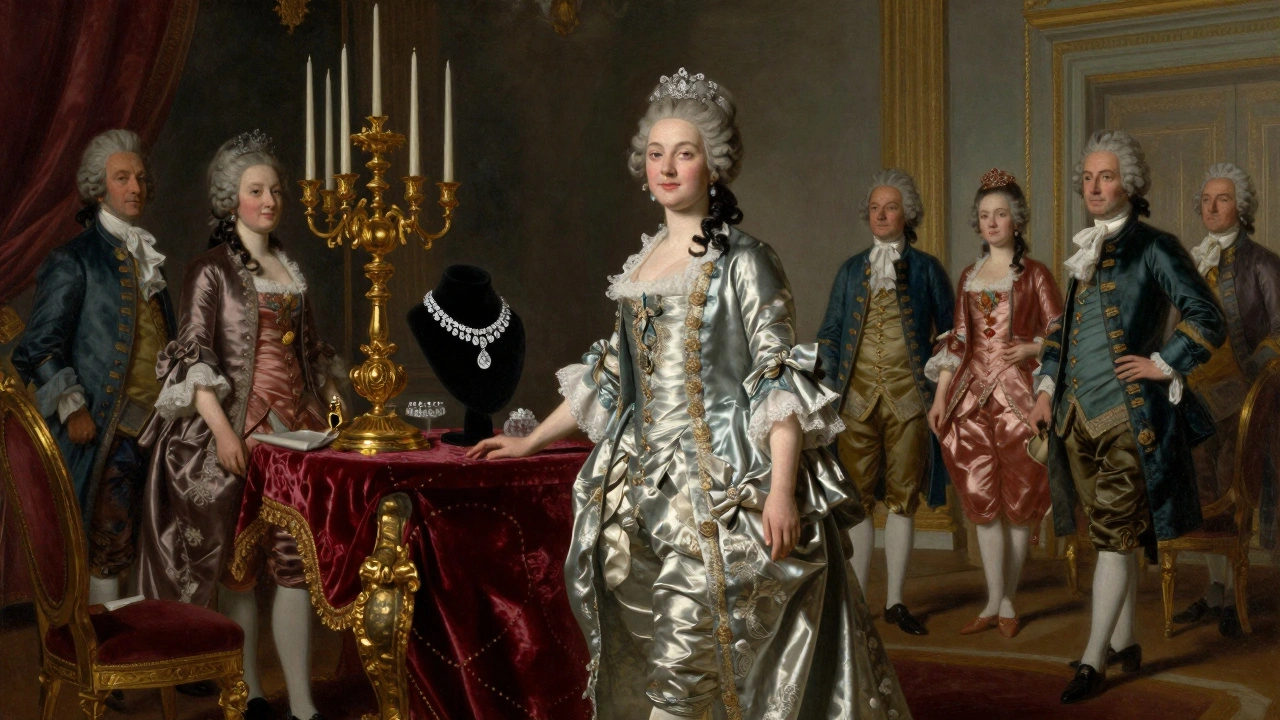
Then came the Affair of the Diamond Necklace in 1785. A con artist named Jeanne de Valois-Saint-Rémy, pretending to be close to Queen Marie Antoinette, convinced a cardinal to buy a £1.6 million diamond necklace-on credit-for the queen. The queen had nothing to do with it. But when the fraud exploded, the public didn’t care. They believed the queen was greedy, wasteful, and corrupt. The scandal didn’t just damage reputations. It cracked the foundation of the monarchy. Five years later, the French Revolution began.
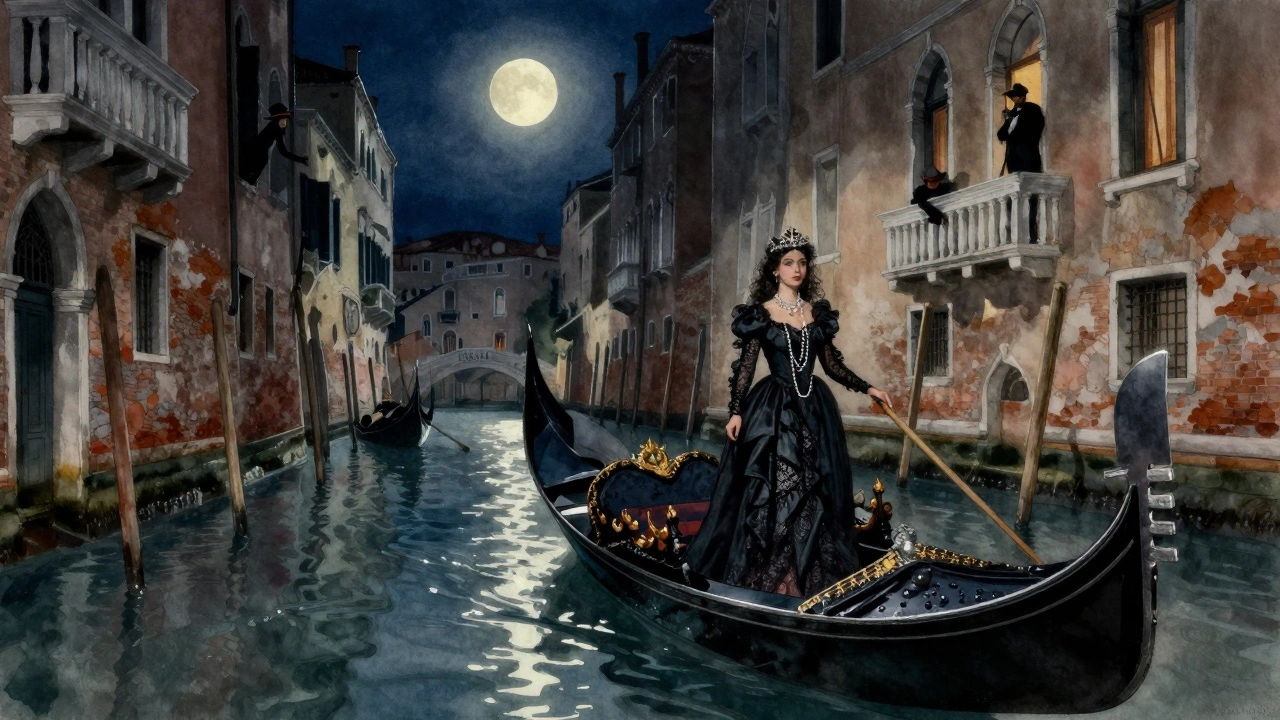
And it wasn’t just France. In Venice, La Mazzolara-a courtesan who reportedly slept with over 200 noblemen in a single year-was so powerful she could cancel a senator’s election. In Japan, Oeyo, a courtesan turned political broker, helped negotiate peace between warring samurai clans. Her portrait still hangs in Kyoto temples as a symbol of quiet power.
Why Did Society Fear Them So Much?
Because courtesans broke the rules-and got away with it.
Men could have mistresses. But only women like these turned mistresses into masters. They didn’t need marriage to control wealth. They didn’t need birthright to enter palaces. They used their bodies, yes-but also their minds, their networks, and their ability to manipulate desire itself.
The church called them sinners. The nobility called them threats. And they were right. A courtesan could turn a prince into a fool, a banker into a beggar, and a king into a laughingstock. When a courtesan fell from grace, it wasn’t just a personal scandal. It was a public humiliation of the entire power structure.
The Rise and Fall of the Courtesan Class
The golden age of courtesans lasted from the 1500s to the late 1800s. It ended not because men lost interest, but because society changed. Industrialization made wealth less about land and more about factories. Democracy made birthright less important than votes. Women gained rights-and no longer needed to be courtesans to have influence.
By the 1890s, the last great courtesans were fading into history. Some became actresses. Others opened boarding houses. A few wrote memoirs, like La Belle Otero, who claimed to have seduced three kings and a pope. Her book sold millions. The world still couldn’t look away.
Who Were the Most Dangerous Courtesans?
Here are five whose names still send shivers through history books:
- La Catinat (France, 1600s) - She turned a poor family into a fortune by sleeping with the Duke of Orléans. When he died, she inherited his chateau and lived like royalty.
- Veronica Franco (Venice, 1500s) - A poet who published two books of verse. She defended herself in court against accusations of witchcraft-and won.
- Nell Gwynn (England, 1600s) - A former orange seller who became King Charles II’s favorite mistress. She was so beloved, the public cheered her at the theater while booing the king’s official wife.
- Yoshitsune no Oyuki (Japan, 1800s) - She used her connections to smuggle weapons during the Boshin War. The shogunate tried to execute her. She escaped to China.
- La Païva (France, 1800s) - A Portuguese courtesan who married a Russian prince and bought the Hôtel de la Païva in Paris-worth over $100 million today.

What Happened to Their Legacies?
Most courtesans were erased from official records. Their names were scrubbed from paintings. Their letters were burned. But their influence? It survived.
Modern feminism didn’t start with suffragettes. It started with women like Franco and Otero, who refused to be silenced. Modern celebrity culture? It’s built on the courtesan’s playbook: image, mystery, and the power to make men spend everything just to be near you.
Even today, when a woman in the public eye is called a “gold digger” or a “manipulator,” we’re still echoing the same fears that once chased courtesans from palaces.
Why Do We Still Care?
Because we’re still fascinated by the idea that a woman-without a crown, without an army, without a title-could bring down kings.
These scandals weren’t about sex. They were about power. About control. About what happens when someone who’s supposed to be invisible becomes the most visible person in the room.
And that’s why, 300 years later, we still whisper their names.
FAQ: Your Questions About Courtesan Scandals Answered
Were courtesans legally recognized?
In some places, yes. Venice and Paris had official registries for courtesans. They paid taxes, owned property, and could sue or be sued. But they were never considered respectable. Their legal status was a gray zone-tolerated, but never honored.
Did any courtesans become queens?
Not officially, but some came close. Nell Gwynn’s sons were given noble titles by King Charles II. La Païva married a prince. And in Russia, Catherine the Great-though born a princess-rose to power using the same tactics courtesans used: charm, intelligence, and strategic relationships.
How did courtesans get their education?
Many were trained from childhood in music, dance, literature, and conversation. Wealthy families sometimes sent daughters to courtesan schools if they couldn’t afford a dowry. Others were orphans taken in by established courtesans who mentored them like apprentices. Learning to read Latin and play the lute wasn’t a luxury-it was survival.
Were courtesans ever punished for their scandals?
Sometimes. But rarely for the real crimes. Madame de Pompadour died of natural causes. La Mazzolara was exiled, not jailed. The real punishment was social death: being erased from portraits, banned from court, or having their children stripped of titles. The system didn’t want to make martyrs-it wanted to make them invisible.
Are there modern equivalents to courtesans?
Yes-but they’re called influencers, celebrities, or socialites. The tools changed: Instagram instead of salons, podcasts instead of poetry readings. But the dynamic is the same: personal brand, access to power, and the ability to turn attention into influence. The courtesan didn’t disappear. She just got a smartphone.
Kari Watkins
January 15, 2026 AT 12:39OMG I JUST REALIZED LIKE… modern influencers are just courtesans with TikTok 🤯👑✨
La Païva had the Hôtel de la Païva, but today’s girl has a branded merch line and a Fenty collab. Same energy, different Wi-Fi. The sword’s still hidden-now it’s in the DMs. 💅💸
Emily Cross
January 16, 2026 AT 22:26It’s funny how we romanticize these women as ‘powerful’ when they were literally trading sex for survival. The real scandal isn’t that they manipulated men-it’s that society still needed them to do it. Feminism didn’t start with them. It started when women stopped needing to.
Amit krishna Dhawan
January 18, 2026 AT 13:40Bro, this is not just history-it’s a MASTERCLASS in emotional intelligence and social strategy. These women didn’t have degrees from Harvard, but they had something better: they knew how to read a room, how to make a man feel like he was in control while they pulled every string. The real power move? Making the system think they were just ornaments… while they were running the damn boardroom. 🤯
Abhishek Gowda
January 18, 2026 AT 23:56I’m crying. Like… actual tears. Veronica Franco defending herself in court against witchcraft accusations?? And she WON?? 😭 I just wanna hug her through time. These women were warriors in silk gowns. I’m so proud to be a woman today because of them. 💕🫂
Ashok kumar
January 20, 2026 AT 14:53Let’s be REAL-this whole narrative is dangerously romanticized. These women weren’t ‘powerful’-they were exploited, commodified, and ultimately disposable. The fact that we call them ‘influencers’ now is just capitalism repackaging patriarchal abuse with glitter and hashtags. And don’t even get me started on the ‘feminist origins’ nonsense-feminism is about autonomy, not about being the prettiest concubine in the palace! 🚫👑
These women had NO rights. No legal protection. No safety net. And now we’re turning their trauma into a Netflix documentary? That’s not empowerment-that’s necrophilia with a side of aesthetic.
Amal Benkirane
January 21, 2026 AT 01:31I think about how hard it must’ve been to be so smart and still be seen as just a pretty face. These women had to be brilliant just to be allowed to exist. I’m grateful they survived. And I’m sorry society made them fight so hard just to be heard.
Thank you for sharing this.
Kelly O'Leary
January 22, 2026 AT 17:10What strikes me most is how little has changed. Today’s women still get called gold diggers when they leverage their charm. Still told to smile more when they speak up. Still erased from the history books unless they’re ‘good girls.’
The courtesans didn’t need to be queens to change the world. They just needed to be seen.
And now, finally, we’re starting to look.