

You’ve probably seen headlines about sex work-crime rates, legal debates, sensationalized stories. But how often do you hear about the sex worker mental health crisis hiding behind those headlines? It’s not about judgment. It’s about survival. Thousands of people in the UK and beyond are doing this work to pay rent, support families, or simply survive. And the toll it takes on their minds? It’s staggering. And it’s ignored.
Key Takeaways
- Sex workers are 18 times more likely to experience depression and anxiety than the general population.
- Most mental health services are not trained to understand the realities of sex work.
- Peer-led support groups save lives-because no one understands like someone who’s lived it.
- Stigma, not the work itself, is the biggest driver of mental health struggles.
- Access to trauma-informed care can reduce PTSD symptoms by up to 60% in sex workers.
Why Sex Worker Mental Health Isn’t Just a Side Issue
Think about the last time you felt overwhelmed-maybe a bad day at work, a fight with a partner, or just the weight of constant stress. Now imagine carrying that every single day, while also being told you’re not worthy of care, not deserving of respect, or worse, that your pain is your own fault.That’s the reality for many sex workers. A 2024 study by the London School of Hygiene & Tropical Medicine found that 73% of sex workers surveyed reported symptoms of clinical depression. Nearly half met the criteria for PTSD. And these numbers aren’t outliers-they’re the norm.
Why? Not because sex work is inherently traumatic. But because society treats sex workers like they’re disposable. When you’re constantly feared, judged, or criminalized, your nervous system never gets to relax. Your body stays in fight-or-flight mode. That’s not a choice. That’s chronic stress.
And here’s the cruel twist: when sex workers try to get help, they’re often met with confusion, pity, or worse-condemnation. Therapists who’ve never met a sex worker might assume they’re ‘rescuing’ someone. They don’t ask what the person needs. They assume they know better.
What Sex Worker Mental Health Really Looks Like
Let’s be clear: sex work is not a monolith. Some people work independently from home. Others work in agencies. Some are street-based, others online-only. Some are in it for a few months. Others have done it for decades. Their mental health needs aren’t the same.But the common threads? They’re brutal.
- Isolation: Many can’t tell family or friends. They live in silence.
- Hyper-vigilance: Constantly scanning for danger-clients, police, predators.
- Shame: Internalized stigma that whispers, ‘You don’t deserve help.’
- Financial instability: One bad week can mean eviction or hunger.
- Legal risk: Even in places where sex work isn’t illegal, related activities (like advertising or sharing space) can land you in trouble.
One sex worker in Manchester told me, ‘I’ve had therapists tell me to ‘find a real job.’ They didn’t ask if I had savings. Or childcare. Or a landlord who wouldn’t evict me if I lost income. They just saw ‘sex worker’ and thought ‘problem to fix.’’
That’s not therapy. That’s dismissal.
The Mental Health Support That Actually Works
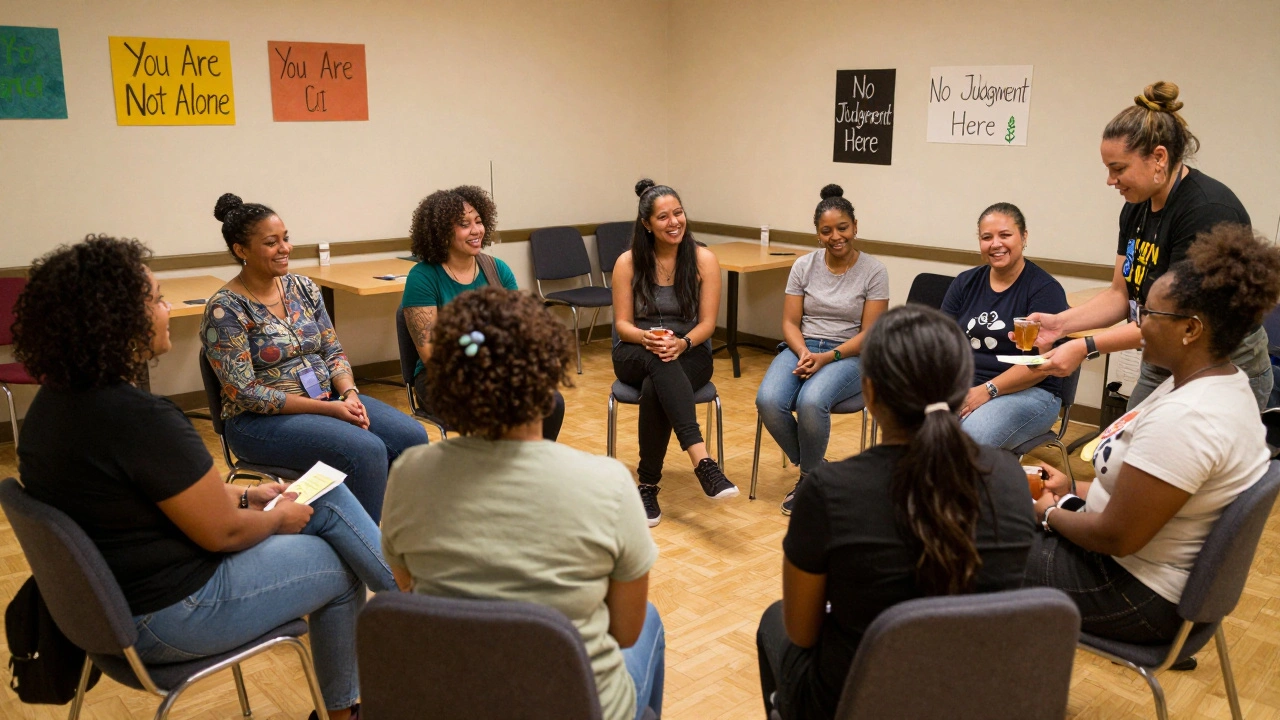
The best mental health support for sex workers isn’t found in fancy clinics. It’s found in peer networks. In community centers. In safe spaces where no one bats an eye when you say, ‘I had a rough client today.’Organizations like Sex Workers Anonymous and UK Network of Sex Work Projects run drop-in centres across the UK. They offer free counselling, legal advice, housing help, and-most importantly-someone who won’t judge you for how you earn your living.
Peer support isn’t just ‘nice to have.’ It’s life-saving. A 2023 trial in Glasgow showed that sex workers who attended weekly peer groups were 58% less likely to report suicidal thoughts than those who didn’t. Why? Because when you’re heard without being fixed, you start to believe you’re worth hearing.
And trauma-informed care? That’s the gold standard. It means therapists understand:
- That ‘resistance’ isn’t defiance-it’s survival.
- That trust takes months, not sessions.
- That your safety comes before your ‘progress.’
One London-based therapist who works exclusively with sex workers told me, ‘I don’t ask why they’re doing this work. I ask: What do you need right now? And then I listen.’ That’s the difference.
Why Most Mental Health Services Fail Sex Workers
Here’s the hard truth: 85% of NHS mental health services have no training on working with sex workers. Not because they’re bad people. But because they’ve never been taught.Therapists are trained to see ‘prostitution’ as a symptom of abuse. But for many, it’s a choice made under constraints-not because they were trafficked, but because they had no other options. And conflating those realities does real harm.
Imagine going to a doctor with chest pain. They diagnose you with stress-then prescribe meditation. But you’ve got a blocked artery. That’s what happens when mental health professionals don’t understand the context of sex work.
They’ll say, ‘You need to leave the industry.’ But if you’re paying for your kid’s school fees with your earnings? Or if you’ve been kicked out of your home? Leaving isn’t a switch you flip. It’s a bridge you build-with support, resources, and time.
Until mental health services stop seeing sex workers as problems to solve-and start seeing them as people with complex lives-they’ll keep failing.
How to Find Support if You’re a Sex Worker
If you’re a sex worker looking for help, you’re not alone. There are people who get it. Here’s how to find them:- Call the UK Network of Sex Work Projects. They have a free helpline (0800 121 6654) and can connect you to local groups.
- Search for peer-led groups. Look for organizations that say ‘by sex workers, for sex workers.’ Avoid groups that frame you as a victim.
- Use online forums. Reddit’s r/sexwork and private Facebook groups offer anonymity and real talk.
- Ask for trauma-informed therapists. Say: ‘I need someone who understands sex work isn’t inherently traumatic.’ If they don’t know what you mean, keep looking.
- Don’t wait for ‘perfect’ help. Even one supportive conversation can shift your whole week.
Some services are free. Some offer sliding scale fees. Most don’t ask for ID. You don’t need to be ‘clean’ or ‘reformed’ to get help. You just need to be alive.
What Allies Can Do
If you’re not a sex worker but care about mental health, here’s how you can help:- Don’t assume. Don’t ask ‘How did you get into this?’ That’s not your story to probe.
- Donate. Groups like Strippers4Strippers and SWARM rely on donations for free counselling.
- Amplify. Share resources. Talk about this. Break the silence.
- Challenge stigma. When someone says, ‘They chose it, so they deserve it,’ say: ‘No one deserves to be ignored when they’re hurting.’
Change doesn’t come from pity. It comes from solidarity.

Comparison: Sex Worker Mental Health Support vs. General Mental Health Services
| Feature | Sex Worker-Specific Support | General Mental Health Services |
|---|---|---|
| Training on sex work | Yes-staff are often current or former sex workers | Usually none |
| Confidentiality | Strict-no reporting to police or social services without consent | Varies-may be required to report in some cases |
| Non-judgmental approach | Core principle | Often lacking |
| Practical help (housing, legal) | Integrated | Rarely offered |
| Accessibility | Free or low-cost, no ID needed | Long waitlists, often require GP referral |
| Peer involvement | Central to model | Minimal or absent |
Frequently Asked Questions
Is sex work the cause of mental health issues?
No. The cause is stigma, criminalization, isolation, and lack of access to safe, non-judgmental care. Many sex workers report better mental health after leaving environments of violence or exploitation-not because they stopped working, but because they gained safety and dignity.
Can I get therapy on the NHS if I’m a sex worker?
Yes, you can. But most NHS therapists aren’t trained to work with sex workers. You might get help, but it won’t always be the right kind. If you feel misunderstood, ask for a referral to a specialist service. You have the right to care that respects your reality.
Are there free mental health services for sex workers in London?
Yes. Groups like SWARM (Sex Workers Action Group) and Streets of London offer free, confidential counselling and peer support. No registration or ID is required. Walk-ins are welcome. You can also call the UK Network helpline for local contacts.
What if I’m scared to reach out?
That’s completely normal. Many people feel that way. Start small. Text a friend. Join a private online group. Read stories from others. You don’t have to speak to a therapist to begin healing. Just knowing you’re not alone can be the first step.
Do sex workers who use drugs or have trauma histories get better care?
They often get worse care-because services assume they’re ‘high-risk’ and treat them with suspicion. But trauma-informed, peer-led services are designed exactly for this. They don’t see drug use or trauma as reasons to withhold help. They see them as reasons to offer more.
What Comes Next
Mental health isn’t a luxury. It’s a human right. And for sex workers, that right is too often denied-not because they’re broken, but because the system is blind.If you’re a sex worker reading this: you’re not a statistic. You’re not a problem. You’re a person who’s kept going, even when the world looked away. You deserve care. You deserve rest. You deserve to be seen.
If you’re someone who cares: don’t wait for someone else to fix this. Share this article. Donate to a peer group. Talk about it at dinner. Challenge the myth that sex work is inherently harmful. Because the truth? The harm comes from how we treat the people doing it.
Support isn’t optional. It’s the only thing standing between survival and collapse.
Thiago Gonçalves
January 10, 2026 AT 05:03This hit me right in the chest. I’ve never worked in sex work, but I’ve seen friends burn out from jobs that treated them like disposable cogs. The fact that therapists don’t get it? That’s not just a gap-it’s a betrayal. 🙏
Tim Orrell
January 11, 2026 AT 07:15The structural violence embedded in the medical industrial complex is the real pathology here not the labor itself the epistemic erasure of lived experience by clinical hegemony is what pathologizes survival not the act of exchange
Clay Caldwell
January 12, 2026 AT 14:39Interesting how the data aligns with what I’ve seen in South Africa too. The stigma’s universal even if the laws differ. People just don’t want to see the humanity in it.
anjan tiwari
January 12, 2026 AT 20:05Bro why are we even doing this? People choose this. If they don’t like it they can quit. End of story. 😒
Jazzmen McCray
January 13, 2026 AT 04:29That therapist quote? That’s the whole damn thing right there. Ask what they need not why they’re here. Stop playing savior. Just show up. 🙌
Anjali Ragi
January 13, 2026 AT 15:09Wait… this whole thing is a setup by Big Pharma to push antidepressants and destroy traditional family values 😳👁️🗨️
Griffin Treanor
January 14, 2026 AT 17:35People who do this work are weak. They lack discipline. Real adults build businesses not sell their bodies. This isn't empowerment it's surrender
Trent Curley
January 14, 2026 AT 21:09Look I get the emotional appeal but let’s be real here. Most sex workers are in it because they’re addicted to drama or have poor impulse control. This isn’t a mental health crisis it’s a moral failure wrapped in victimhood
Ntombikayise Nyoni
January 14, 2026 AT 21:28Peer-led support is the only model that works. No ID. No judgment. Just presence. That’s all most people need to start healing.