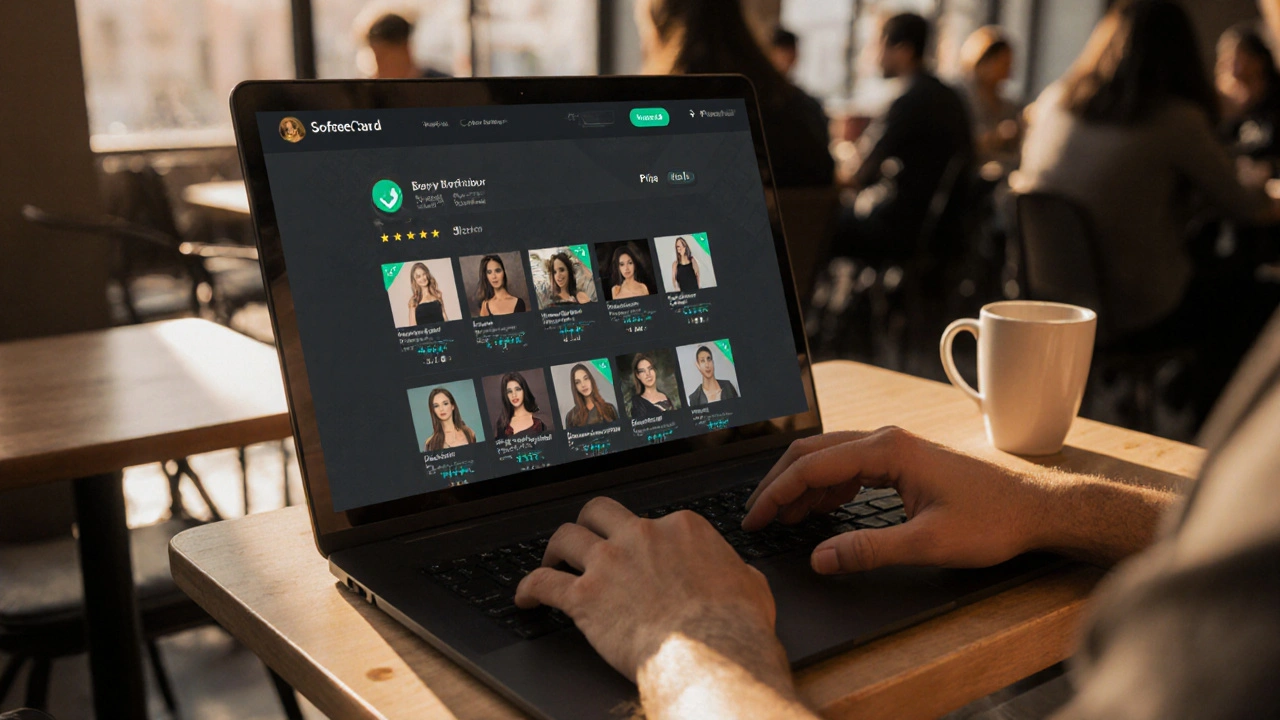

Ever wondered how those escort sites actually make money? You scroll through them, see the photos, read the profiles, and maybe even wonder what’s behind the screen. It’s not just about people offering company-it’s a full-blown business, with supply chains, marketing teams, payment processors, and legal gray zones. Let’s cut through the noise and look at what’s really going on inside these sites.
What Exactly Are Escort Sites?
Escort sites aren’t dating apps. They’re not classified ads like Craigslist. They’re specialized platforms built to connect people looking for companionship-with individuals who offer it for a fee. The service usually includes dinner, a walk, maybe a night out, or sometimes more. But the site itself doesn’t provide the service. It’s just the marketplace.
Think of it like Uber, but instead of cars, you’re booking human time. The site handles profiles, photos, messaging, reviews, and payments. The actual workers? They’re independent contractors. Most don’t work for the site-they work for themselves, using the site as their storefront.
These platforms started as simple forums in the early 2000s. Today, they’re polished, mobile-friendly, and run like tech startups. Some even have dedicated customer support, AI-powered search filters, and fraud detection systems. The best ones look like luxury travel booking sites. That’s no accident.
How Do These Sites Make Money?
Most escort sites don’t charge the workers. Instead, they charge for visibility. You want to be at the top of search results? That’s $50 a month. Want your profile featured on the homepage? That’s $200. Want to appear in email newsletters sent to 50,000 users? That’s another $300.
Some sites take a cut of each transaction-usually 10% to 20%. Others don’t touch the money at all. They just sell advertising. A worker might get paid in cash, Venmo, or crypto. The site doesn’t see it. But they still profit because they sold you the exposure.
There’s also upselling. Premium profiles get priority placement. Video introductions cost extra. Background checks (even fake ones) are sold as trust signals. One major site in the UK made over £1.2 million last year just from profile upgrades and featured listings. Not a single escort got paid by them.
Who’s Running These Sites?
It’s not a bunch of shady guys in basements. Many are run by former tech employees, digital marketers, or even ex-lawyers who saw a gap. One site I looked into was founded by a former Google ad engineer. He built it to solve a problem: “People want companionship. No one’s doing it well online.”
They hire copywriters to write profiles. Designers to make layouts look luxurious. SEO specialists to rank for terms like “luxury escort London” or “discreet companion Manchester.” Some even have PR firms that handle negative press.
The people on the other side? Most are young women, often educated, working part-time. Many have full-time jobs-teachers, nurses, freelancers. They use escorting to pay off student loans, save for travel, or fund startup ideas. A 2024 survey of 800 UK-based escorts found that 68% had a university degree. Nearly half said they’d never do it full-time.
How Do Workers Get Found?
It’s not random. Workers build their presence across multiple platforms. They might have a profile on one site, an Instagram for lifestyle content, a Telegram channel for direct bookings, and a private website with testimonials.
They use keywords like “discreet,” “intelligent,” “well-traveled,” “no nonsense.” They avoid anything that sounds like sex work. The language is carefully chosen to appeal to professionals-executives, entrepreneurs, expats-who want conversation, not just physical contact.
One London-based escort I spoke with (anonymously) said she spends 10 hours a week just managing her online presence. She edits photos, responds to messages, updates her calendar, and checks reviews. She doesn’t have an agency. She does it all herself. And she makes £4,000 a month.

What’s the Legal Reality?
In the UK, it’s legal to sell companionship. It’s legal to be paid for dinner, a movie, or a weekend trip. It’s illegal to run a brothel or to solicit in public. But there’s no law saying you can’t post a profile saying, “I’m looking for someone to take me to dinner and a show.”
That’s why these sites thrive. They walk the line. They never say “sex.” They never mention “massage.” They use words like “time,” “company,” “evening,” “escape.” The rest? Left to interpretation.
Police don’t shut these sites down. Why? Because they’re not breaking any laws. The workers aren’t being forced. The clients aren’t paying for illegal acts. The sites are just hosting content. That’s protected under free speech laws.
What Do Clients Actually Want?
It’s not what you think. Most clients aren’t looking for sex. They’re lonely. They’re stressed. They’re tired of dating apps that feel like job interviews. They want someone who listens, who’s funny, who doesn’t judge.
A 2025 study by the University of Edinburgh tracked 1,200 escort site users. The top three reasons for booking were:
- Feeling understood (67%)
- Need for non-judgmental conversation (59%)
- Desire for physical closeness without emotional pressure (52%)
Sex? Only 18% listed it as a primary goal. Most said it never came up. Many clients said they’d rather pay for a quiet dinner than a sexual encounter. The companionship is the product. Everything else is optional.
How Do Payments Work?
Sites don’t handle money. That’s intentional. Workers collect directly. Most use bank transfers, PayPal, or crypto. Some even take cash after the meeting.
Why? To avoid being classified as a payment processor-which would trigger banking restrictions. Banks hate this business. Many workers have had accounts frozen. That’s why crypto is growing. Bitcoin and Monero let them move money without banks noticing.
One worker in Bristol told me she uses a business account under her freelance writing name. She lists “consulting services” on invoices. She’s never been flagged. “It’s just another gig,” she said. “I’m not selling sex. I’m selling time.”

What’s the Risk?
There are risks. Scammers. Fake profiles. Stalkers. Overly aggressive clients. Some workers have been doxxed. Others have been harassed online.
But most serious risks come from not knowing how to protect yourself. The best workers use:
- Screening questions before meeting
- Meeting in public places first
- Sharing location with a friend
- Using a burner phone for bookings
- Never sharing home address or real name
One site, based in Manchester, even offers a free safety guide to registered users. It includes a checklist, emergency contacts, and how to spot red flags. It’s not perfect-but it’s better than nothing.
Comparison: Escort Sites vs. Dating Apps
| Feature | Escort Sites | Dating Apps |
|---|---|---|
| Primary Purpose | Companionship for pay | Relationship or casual dating |
| Payment Model | Direct fees, upfront | Free or subscription-based |
| Screening | Extensive profiles, reviews | Minimal, often anonymous |
| Expectation Clarity | Explicit: time, activities, price | Ambiguous: “Let’s see where it goes” |
| Client Demographics | Professionals, older, higher income | Younger, mixed income |
| Legal Risk | Low if boundaries are clear | Very low |
Frequently Asked Questions
Are escort sites legal in the UK?
Yes, as long as the service is clearly companionship-not sex work. You can legally pay someone for dinner, a walk, or a weekend trip. Soliciting in public or running a brothel is illegal. But online platforms that connect people for paid time? They operate in a legal gray zone-and so far, no UK court has shut one down for breaking the law.
Do escort sites sell sex?
The sites themselves don’t. The workers might, but they’re not required to. Most profiles avoid any mention of sex. Many clients say they’d never ask for it. The language is deliberately vague: “company,” “time,” “evening,” “escape.” It’s about perception. If you say it outright, you risk legal trouble. If you imply it, you don’t.
How much do escorts make?
It varies. In London, most charge £100-£250 per hour. Top-tier workers with strong profiles and reviews can make £5,000-£10,000 a month. But it’s not passive income. You’re running a small business: managing profiles, answering messages, scheduling, marketing, and staying safe. Most work 10-20 hours a week. It’s not a get-rich-quick scheme. It’s a service job with high emotional labor.
Can you get in trouble for using an escort site?
Not if you’re just booking companionship. Police don’t go after clients unless there’s evidence of illegal activity-like underage contact, coercion, or public solicitation. Most users are professionals who treat it like hiring a personal assistant for the evening. The risk is low, but discretion matters. Don’t post about it online. Don’t use your real name. Keep it private.
Why do people use escort sites instead of dating apps?
Dating apps are unpredictable. You never know if someone’s real, if they’re interested in you, or if they’ll ghost you. On escort sites, everything’s clear: price, time, location, expectations. You know what you’re paying for. No games. No ambiguity. For people who value time and clarity, it’s a better option.
Final Thoughts
Escort sites aren’t about sex. They’re about connection in a world that’s increasingly lonely. They’re about people who want to be seen, heard, and appreciated-not just used. The business side? It’s cold, calculated, and profitable. But the human side? It’s real. People are using these platforms to fill gaps that dating apps, therapy, or friendships can’t.
If you’re curious, don’t judge. Ask why. What does someone need to pay for companionship? The answer might say more about us than about them.