

You’ve seen the headlines. The moral panic. The memes. The politicians waving their hands like sex workers are some kind of plague. But have you ever stopped to ask: how does society really see sex workers? Not the cartoon version. Not the stereotype. The actual people.
Let’s cut through the noise. Sex work isn’t a single story. It’s thousands of lives-some by choice, some by survival, most somewhere in between. And society’s view? It’s a mess of fear, hypocrisy, and old-fashioned judgment dressed up as concern.
What Society Actually Thinks (And Why)
Ask ten people what they think of sex workers, and you’ll get ten different answers. But dig deeper, and you’ll find the same patterns repeating across cultures, countries, and centuries.
On one side, there’s the moral panic crowd. They see sex work as inherently degrading, a sign of broken families, failed education, or moral collapse. They’ll quote scripture, cite outdated studies, or point to a single tragic case as proof that all sex work is exploitation.
On the other side, you’ve got the silence. The people who don’t say anything because they don’t know what to say. They don’t hate sex workers, but they don’t want to be seen talking about them either. They’ll change the subject at dinner parties. They’ll click past a news story. They’ll pretend it doesn’t exist.
And then there’s the third group-the ones who actually know someone who does sex work. A cousin. A friend from college. A neighbor. Someone who pays rent, takes care of their kid, and still has to hide it. These people don’t have answers. They just know the truth: this isn’t about evil. It’s about survival, autonomy, and a system that leaves people with no good options.
The Stigma Isn’t About Sex-It’s About Power
Here’s the uncomfortable truth: society doesn’t really care about sex. It cares about control.
Think about it. We live in a world where people make millions selling lingerie on Instagram, where porn is more accessible than ever, and where dating apps reward sexual attention like currency. But the moment someone exchanges sex for money directly, suddenly it’s “immoral.”
Why? Because sex work challenges the idea that women (and men, and non-binary people) should only be valued when they’re passive, invisible, or attached to someone else’s approval. Sex workers say: I’m in control of my body, and I’m getting paid for it. That’s a threat to old power structures.
It’s not about morality. It’s about who gets to decide what’s acceptable. And right now, that power still lives mostly in the hands of people who’ve never had to choose between rent and food.
Real People, Real Lives
Let’s talk about Maria. She’s 38. Works part-time as a massage therapist. Does escorting on the side to pay for her daughter’s therapy. She doesn’t advertise online. She doesn’t wear flashy clothes. She’s not “glamorous.” She just needs to make ends meet after her husband left and the NHS waitlist for her daughter’s care stretched to two years.
Then there’s Jamal. He’s 24. Started doing webcam work after losing his job in retail. He didn’t want to be a sex worker. But when his landlord raised the rent by 40%, and his student loans were due, he had one tool he could use: his phone, his camera, and his voice. He’s now saving to go back to school. He doesn’t tell his family.
And then there’s Aisha, who’s been doing street-based work for 12 years. She’s survived violence, arrests, and homelessness. She’s also organized a mutual aid network for other sex workers in her neighborhood. She doesn’t want to be “rescued.” She wants legal protection. And a place to sleep without being chased away by police.
These aren’t exceptions. They’re the rule. Most sex workers aren’t criminals. They’re parents, students, nurses, artists, and caregivers. They just happen to exchange sex for money.

Where the Law Makes Things Worse
In the UK, it’s not illegal to sell sex. But almost everything that makes it safer is.
You can’t work indoors without risking being charged with “keeping a brothel.” You can’t advertise. You can’t hire security. You can’t screen clients properly without being accused of “pimping.”
So what happens? People are pushed onto streets. Into unsafe situations. Into the hands of people who exploit them because there’s no legal way to say no.
The Nordic Model-where buying sex is illegal but selling it isn’t-sounds good on paper. But in practice, it just pushes sex workers further underground. Clients get more paranoid. Workers get fewer options. And the police? They still show up to arrest the people who are most vulnerable.
There’s a reason organizations like Amnesty International and the World Health Organization support decriminalization. It’s not because they want to promote sex work. It’s because they’ve seen what happens when you criminalize survival.
How Media Shapes the Narrative
Think about the last time you saw a sex worker on TV. Chances are, they were either a victim in a crime drama or a villain in a moral tale. Rarely are they shown as complex humans with dreams, fears, and families.
News outlets love stories about “rescues” or “trafficking rings.” But they rarely cover the 87% of sex workers who say they entered the industry voluntarily, according to a 2023 study by the London School of Economics. That’s not sexy. It doesn’t fit the story.
And when they do cover sex workers? It’s often with dehumanizing language. “Prostitute.” “Hooker.” “Call girl.” Words that strip away identity. Meanwhile, a lawyer, a doctor, or a teacher gets to be called by their name.
Language isn’t just words. It’s power. And right now, the language used to describe sex workers makes it easier to ignore their humanity.
What’s Changing? Slowly.
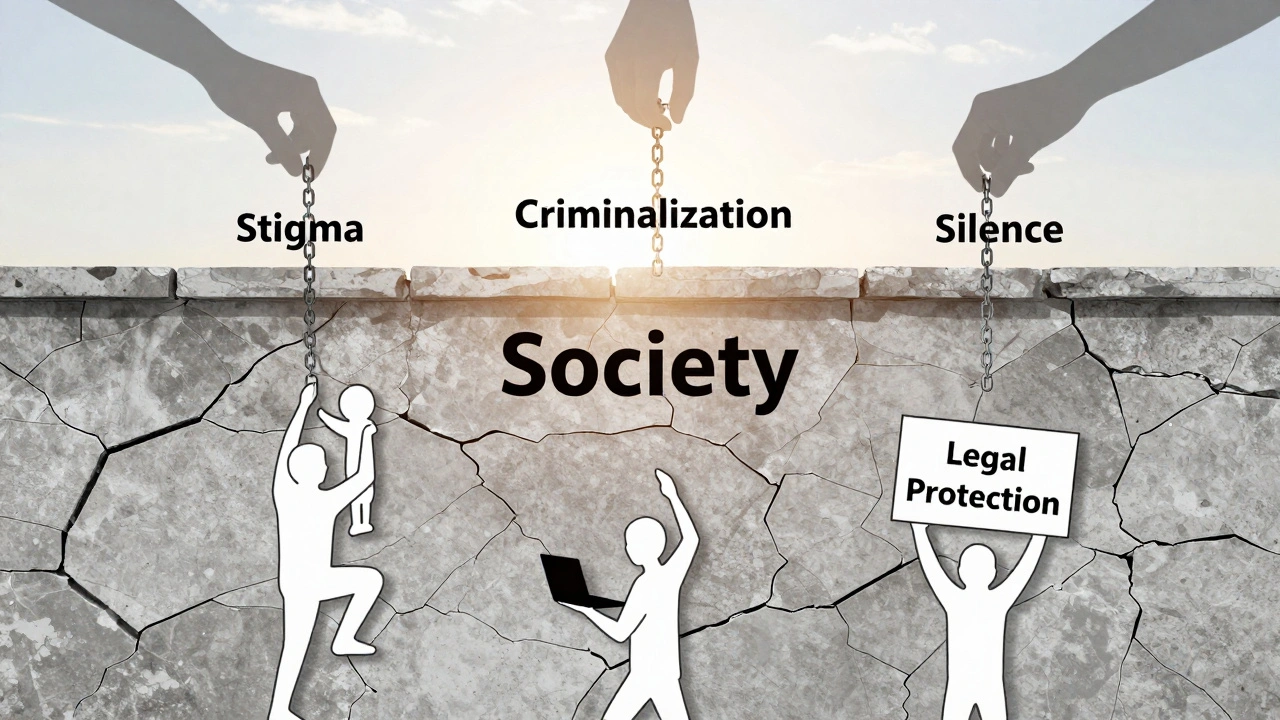
There are cracks in the wall.
More universities are offering courses on sex work as a legitimate field of study. Artists are telling their stories through film and theater. Activists are organizing in cities like London, Berlin, and Vancouver to demand legal rights.
In 2024, Scotland passed a law allowing sex workers to report crimes without fear of arrest for their work. It’s not perfect-but it’s progress.
And online? Platforms like Patreon and OnlyFans have given some workers a way to control their own image, their own pricing, and their own boundaries. They’re not “just porn.” They’re small businesses. Entrepreneurs. Content creators.
Change is slow. But it’s happening. Not because of politicians. Because of people talking. Because of stories being shared. Because someone finally asked: “What if we listened?”
How You Can Help
You don’t need to become an activist overnight. But you can start by changing the way you think.
- Don’t assume someone is “trapped” unless they say so.
- Don’t use slurs. Even in jokes.
- Support organizations that fund sex worker-led groups-not rescue missions.
- If you hear someone say something harmful, speak up. Not to shame them. Just to say: “That’s not true.”
And if you know someone who does sex work? Don’t ask for details. Don’t judge. Just say: “I’m here if you need anything.” Sometimes, that’s all it takes to keep someone alive.
FAQ: Your Questions About How Society Views Sex Workers Answered
Are all sex workers victims of trafficking?
No. Research from the London School of Economics and the Global Network of Sex Work Projects shows that the vast majority of sex workers enter the industry voluntarily. While trafficking does exist, conflating all sex work with trafficking harms real victims and ignores the agency of those who choose this work. Treating all sex workers as victims denies them their humanity and makes it harder for them to access real support.
Why is sex work illegal in some places if selling sex isn’t?
It’s not about safety-it’s about control. Laws that ban advertising, working together, or hiring security make it harder for sex workers to operate safely. These laws are often called the “Nordic Model,” but they’ve been shown to increase violence and reduce access to police protection. When you criminalize the tools of safety, you force people into danger.
Do sex workers want to be “rescued”?
Most don’t. They want legal rights, protection from violence, access to healthcare, and the ability to work without fear of arrest. Rescue missions often involve forced counseling, deportation, or being placed in shelters that don’t match their needs. What sex workers ask for is dignity-not pity.
Is sex work the same as human trafficking?
No. Human trafficking involves force, fraud, or coercion. Sex work-when consensual-is a labor arrangement. Mixing the two makes it harder to identify and help real trafficking victims. It also criminalizes people who are simply trying to survive. Clear definitions save lives.
Why do people judge sex workers so harshly?
Because sex work challenges deep-seated beliefs about gender, money, and control. Society wants to believe that women (and others) should only exchange intimacy for love, not money. When someone breaks that rule, it triggers discomfort-and often blame. The judgment isn’t about sex. It’s about who gets to decide what’s acceptable.
Final Thought: It’s Not About What You Think-It’s About What You Do
How society views sex workers says more about us than it does about them. We can keep pretending they’re invisible. Or we can start asking: What kind of world do we want to live in? One where people are punished for surviving? Or one where people are protected, no matter how they make their living?
The answer isn’t in laws. It’s in the way we talk. In the way we listen. In the way we choose to see each other.

Paul Addleman
December 25, 2025 AT 06:28What struck me most about this piece isn’t the statistics or the policy debates-it’s the quiet dignity in Maria’s story, Jamal’s resilience, and Aisha’s organizing. These aren’t abstract issues. They’re people showing up every day, doing what they have to do, while the rest of us pretend it doesn’t affect us. That’s the real moral failure: indifference dressed as neutrality.
Cynthia Farias
December 26, 2025 AT 17:51One cannot help but reflect upon the ontological dissonance inherent in societal attitudes toward labor commodification when the body becomes the locus of transactional exchange. The moral panic, as articulated, is not predicated upon any coherent ethical framework, but rather upon the epistemological insecurity of those who derive social capital from the performative maintenance of patriarchal norms. One must ask: if intimacy is monetized only when detached from romantic scaffolding, does not the very act of commodification reveal the hollowness of the institution it seeks to preserve?
Cailee Garcia
December 28, 2025 AT 04:37Oh wow, what a revolutionary take: ‘People are people, and society is a hypocrite.’ I’m crying. Seriously, another article that says ‘sex work is work’-like, shocker. Next you’ll tell me water is wet and gravity exists. I’m so moved. Can we get a Pulitzer for this? Or at least a LinkedIn post from a CEO who’s never met a sex worker?
Vickie Patrick
December 29, 2025 AT 07:42I appreciate how you didn’t just list problems but ended with actionable steps. That’s rare. Most posts leave you feeling guilty or overwhelmed. You gave people a way to start-without demanding they become activists. Just don’t use slurs. Just speak up. Just say ‘I’m here.’ That’s enough. That’s everything.
eugene kraft
December 30, 2025 AT 12:20Interesting that you mention OnlyFans as a form of empowerment, but don’t address how the platform’s algorithm favors sexualized content, effectively pushing workers toward more explicit material to survive financially. Is this really autonomy-or just a different cage with better lighting?
Justin Green
January 1, 2026 AT 03:33Just a quick note-grammar police here, but you wrote ‘a few sentences long’ and then used ‘15 sentences’-but in the next line you say ‘long comments must be at least 15 sentences long.’ That’s redundant. Also, ‘NHS waitlist’-you might want to clarify that for international readers. Not everyone knows what that is. Other than that, solid piece. Really humanized the issue.