
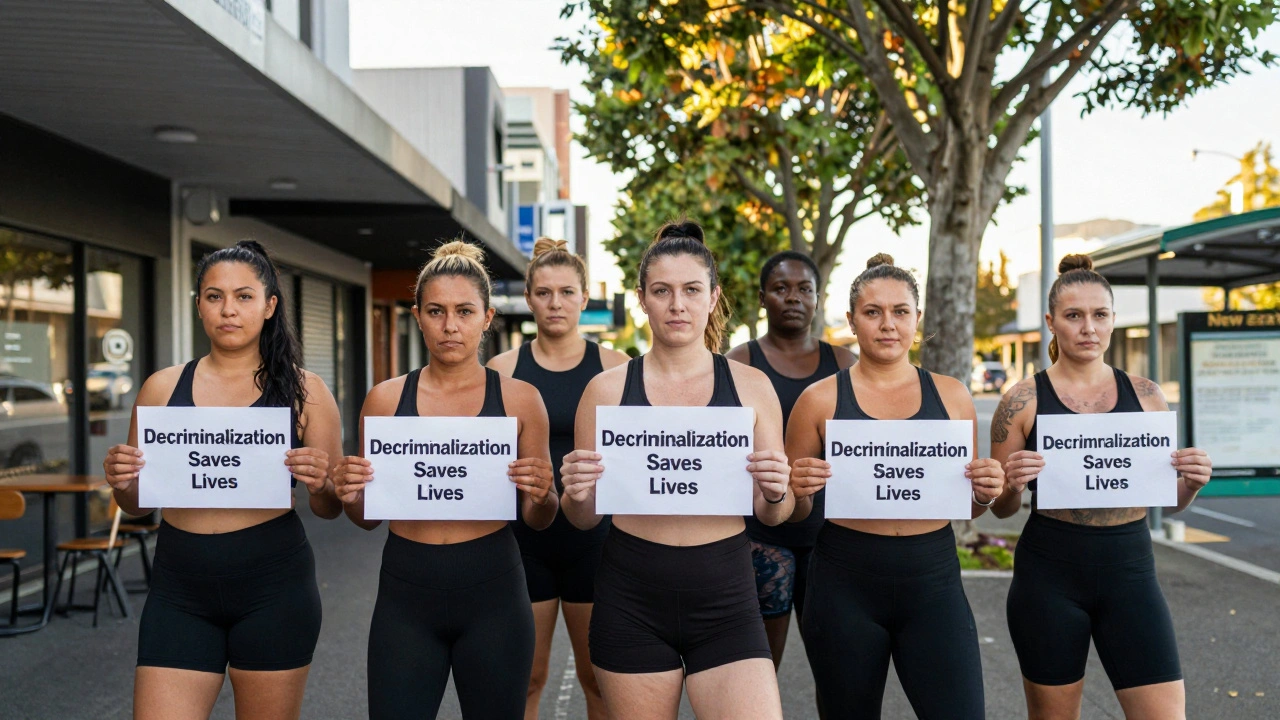
You’ve probably heard conflicting things about whether sex workers are protected by law. Some say they’re criminals. Others say they’re victims. The truth? It’s messy, uneven, and depends almost entirely on where you are. In some places, sex work is treated like any other job. In others, just talking to a client can land you in jail. So who’s really protected? And who’s left hanging?
Short Answer: It Depends Where You Are
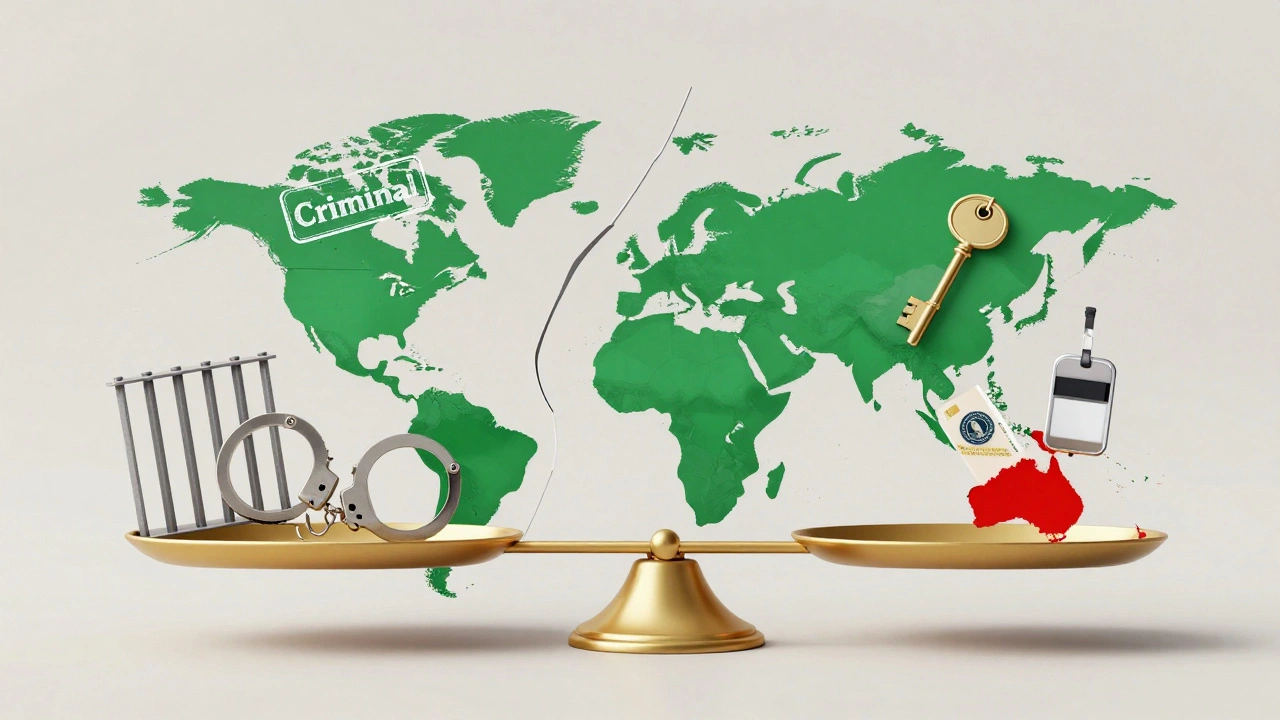
No single answer exists. In countries like the Netherlands, New Zealand, and parts of Germany, sex work is legal and regulated. Workers can open bank accounts, file taxes, and call the police when something goes wrong. In the U.S., most states criminalize selling sex-even though buying it is often overlooked. In places like Sweden and Norway, buying sex is illegal, but selling isn’t. That sounds better, until you realize it still pushes workers into dangerous hiding spots.
Key Takeaways
- There is no global standard-laws vary wildly by country, state, and even city.
- Decriminalization gives workers the most legal protection; criminalization puts them at risk.
- Police often target workers, not traffickers or buyers, even when laws claim to protect them.
- Many sex workers avoid reporting violence because they fear arrest or deportation.
- Legal status doesn’t always mean safety. Access to healthcare, housing, and justice still depends on stigma.
What Does “Legal Protection” Actually Mean?
When people ask if sex workers are protected by law, they’re usually wondering: Can they call the police if they’re attacked? Can they sue a client who doesn’t pay? Can they get a lease or open a business account?
In places where sex work is fully decriminalized-like New Zealand, since 2003-workers have the same rights as any other worker. They can report assault, file for workplace injuries, and even unionize. The Prostitution Reform Act removed criminal penalties and created a legal framework for safe working conditions. The result? Violence against sex workers dropped by 40% in the first five years, according to a 2008 University of Otago study.
But in most of the world, “protection” is a myth. If you’re arrested for solicitation, you can’t ask for legal aid without risking your name being published. If you’re beaten by a client, police might ask why you were “doing that kind of work” instead of helping you. If you’re undocumented, reporting abuse could mean deportation.

How Laws Actually Hurt Sex Workers
It’s easy to assume that criminalizing sex work keeps people safe. But the data tells a different story. A 2014 study by the Global Network of Sex Work Projects found that criminalization increases violence, HIV transmission, and exploitation. Why? Because when sex work is illegal, workers can’t screen clients properly. They can’t insist on condoms without risking arrest. They can’t work together for safety. They can’t use apps or websites to find clients without fear of prosecution.
In the U.S., laws like FOSTA-SESTA (2018) were sold as tools to fight trafficking. Instead, they shut down platforms like Backpage and Craigslist’s adult section-places where many workers screened clients, shared safety tips, and avoided street-based risks. Now, many are forced back onto the streets, where they’re more vulnerable to violence and less able to get help.
Even in places where selling sex isn’t illegal, like Sweden, the law still punishes workers indirectly. By targeting buyers, the system assumes sex workers are helpless victims who need saving. But many workers say they chose this work. When you treat them like children, you take away their agency-and their ability to negotiate safety.
Where Is Sex Work Legal or Decriminalized?
Not all countries treat sex work the same. Here’s how a few major regions handle it:
| Country/Region | Legal Status | Key Protections | Risks |
|---|---|---|---|
| New Zealand | Decriminalized | Workers can rent spaces, unionize, access labor rights | Stigma still affects housing and healthcare access |
| Netherlands | Legal and regulated | Brothels licensed, health checks required, tax ID available | Organized crime still infiltrates some areas |
| Germany | Legal | Workers can get health insurance, pensions, and social benefits | Many still work underground due to social shame |
| United States | Criminalized in most states | None for sellers; buyers rarely prosecuted | High risk of arrest, violence, no access to legal recourse |
| Sweden | Buyer criminalized | Workers not arrested | Forced into isolation, harder to screen clients |
| Canada | Buyer criminalized, advertising illegal | Workers not jailed for selling | Online safety tools blocked, street work increased |
Decriminalization isn’t about endorsing sex work-it’s about recognizing that people do it, and they deserve to do it safely. When you treat it like a crime, you create a black market. And black markets thrive on fear, not fairness.
Why Police Don’t Protect Sex Workers
Here’s a hard truth: In many places, police are one of the biggest threats to sex workers-not the solution. In the U.S., officers have been caught demanding sex in exchange for not arresting workers. In Brazil, police routinely extort money from street-based workers. In India, raids on brothels often lead to mass arrests of workers, while pimps and clients walk free.
Why? Because the system doesn’t see sex workers as people with rights. It sees them as problems to be cleaned up. Even when laws claim to protect them, enforcement often targets the most vulnerable: trans women, migrants, Black and Indigenous workers, and those working on the streets.
One worker in Los Angeles told researchers: “I got stabbed last year. I didn’t call 911. I knew if I did, they’d arrest me first, ask questions later.” That’s not protection. That’s punishment.
What Real Protection Looks Like
Real legal protection means three things:
- Decriminalization: No laws against selling, buying, or organizing sex work. Workers can operate without fear of arrest.
- Access to justice: Workers can report abuse, theft, or violence without being treated as suspects.
- Equal rights: Workers can rent apartments, open bank accounts, get health insurance, and claim unemployment like anyone else.
Organizations like the Global Network of Sex Work Projects and SWOP USA have been pushing for these changes for decades. In 2021, Virginia became the first U.S. state to decriminalize sex work for adults (though it’s still blocked by federal law). In 2023, Canada’s Supreme Court ruled that laws forcing sex workers to work in dangerous conditions violate constitutional rights.
But change moves slowly. And until laws treat sex work like work-not a sin or a crime-protection will remain a privilege for the few.
What You Can Do
If you believe sex workers deserve safety and dignity, here’s how you can help:
- Support organizations that advocate for decriminalization, like SWOP, Red Umbrella Fund, or the Global Network of Sex Work Projects.
- Don’t assume all sex workers are victims. Many are workers. Listen to their stories.
- Challenge myths. Sex work isn’t the cause of trafficking-it’s often the only option for people trapped by poverty, racism, or lack of alternatives.
- Vote for leaders who support harm reduction, not punishment.
Protection isn’t about moral judgment. It’s about basic human rights. And if you believe anyone deserves to be safe, then you have to believe sex workers do too.
Is it illegal to be a sex worker in the U.S.?
In most U.S. states, selling sex is illegal. Buying sex is rarely prosecuted. Some cities, like San Francisco and Seattle, have moved toward decriminalizing sex work for adults, but federal laws still block full legalization. Even where it’s not enforced, arrest records can ruin your ability to get housing, jobs, or benefits.
Do sex workers have access to healthcare?
In decriminalized places like New Zealand and the Netherlands, yes-they can access public health services without fear. In criminalized areas, many avoid clinics because they’re afraid of being reported to police. Some organizations offer free, confidential care, but stigma and lack of funding limit access.
Why don’t sex workers just quit?
Many do-but not everyone has options. For some, it’s the only way to pay rent, support children, or escape abuse. Others choose it because they like the flexibility or income. Telling someone to “just quit” ignores the systemic barriers they face: discrimination, lack of education, no safety net, and criminal records that block other jobs.
Does legalizing sex work increase trafficking?
No. Research from the World Health Organization and the United Nations shows that criminalization increases trafficking by pushing work underground. Decriminalization allows authorities to focus on real exploitation, not consensual adult work. Countries with legal frameworks have better tools to identify and rescue trafficked people.
Are trans sex workers protected by law?
Often, less than anyone else. Trans women, especially trans women of color, face extreme violence and police harassment-even in places where sex work is legal. Many are denied housing, healthcare, and legal services because of their gender identity. Legal protections exist on paper, but enforcement rarely matches.
Andy Haigh
January 30, 2026 AT 05:51Decriminalization is just surrender to moral decay
When you remove the stigma you remove the deterrent
People don’t need to sell their bodies unless they’re broken
And now we’re rewarding brokenness with legal status
This isn’t liberation it’s systemic surrender
The state shouldn’t be a pimp
Let them get real jobs or starve
Either way stop pretending this is a human rights issue
It’s a failure of character and culture
Patrick Wan
February 1, 2026 AT 05:30Have you ever considered that this entire debate is a distraction orchestrated by globalist elites to dismantle traditional family structures?
Notice how every ‘progressive’ nation pushing decriminalization is also pushing open borders, gender ideology, and the erosion of religious morality?
The UN, WHO, and ‘SWOP’ are not NGOs-they’re Trojan horses for the New World Order.
They don’t care about ‘safety’-they care about control.
When you normalize sex work, you normalize the commodification of the human body-and once that line is crossed, what’s next?
Children? Pets? Organs?
It’s all connected.
The data they cite? Fabricated.
The studies? Funded by Soros.
Wake up.
This isn’t about rights-it’s about population control disguised as compassion.
Lydia Huang
February 3, 2026 AT 04:13YALL I JUST READ THIS AND I’M CRYING 😭
SO MANY PEOPLE DON’T GET IT BUT THIS POST IS SO CLEAR
SEX WORK IS WORK 💪
PEOPLE DESERVE TO BE SAFE AND NOT ARRESTED JUST FOR TRYING TO SURVIVE
LET’S PROTECT OUR FELLOW HUMANS 🤍
PLS SUPPORT SWOP AND VOTE FOR PEOPLE WHO GET IT 🙏
WE CAN DO THIS TOGETHER!!!
Cindy Pino
February 3, 2026 AT 06:07It’s laughable how people mistake decriminalization for liberation
They don’t understand that legality doesn’t erase the pathology
Sex work is the inevitable byproduct of a culture that has abandoned virtue, replaced dignity with transaction, and elevated individualism above all
Those who defend it are either willfully blind or actively complicit in the erosion of social fabric
And yes I’m talking to you, Lydia
Emojis won’t fix the moral vacuum
And no, the fact that someone ‘chose’ it doesn’t make it noble
Choice without context is just surrender
Nicholas Simbartl
February 3, 2026 AT 08:20I mean… I think about this a lot
Like not in a shallow way
But like… deeply
There’s something about the way society treats sex work that reflects how we treat all marginalized labor
It’s not really about sex
It’s about who we decide is disposable
And who gets to be seen as human
And I think… maybe the reason we criminalize it isn’t because it’s immoral
But because it’s too honest
It shows us the raw economics of survival in a system that promises opportunity but delivers scarcity
And that’s uncomfortable
So we punish the messenger
Instead of fixing the system
And now we’re surprised when people get hurt
But we never ask why they were out there in the first place
It’s easier to lock them up than to raise the minimum wage
Or fund housing
Or mental health care
Or stop treating people like problems to be managed
Instead of human beings to be supported
And I just… I don’t know
I feel like we’re all complicit
And we’re all pretending we’re not
nested bean
February 4, 2026 AT 16:20Hey I just wanted to say thanks for writing this
It’s one of the clearest breakdowns I’ve seen
I used to think the Swedish model was ‘better’ until I read how it actually pushes people into isolation
And the FOSTA-SESTA thing… wow
I had no idea how much it hurt actual workers
Thanks for including the stats too
It helps when people say ‘well what about the trafficked?’
And I’m curious-do you know if any cities in the US have tried harm reduction programs that aren’t police-based?
Like peer outreach or safe drop-in centers?
Just wondering if there’s anything I can support locally
Dillon Diaz
February 6, 2026 AT 02:13Decriminalization is a fantasy built on denial
There is no such thing as ‘just work’ when it involves the body as commodity
And don’t give me that New Zealand nonsense
They’re a tiny island with a population smaller than Chicago
It doesn’t scale
And the ‘40% drop in violence’? Correlation isn’t causation
Maybe crime dropped because the population aged
Or because policing got more efficient
Or because the data was cherry-picked
Either way
Letting people sell sex doesn’t fix poverty
It just makes exploitation look respectable
And that’s not progress
That’s surrender dressed in rainbow flags